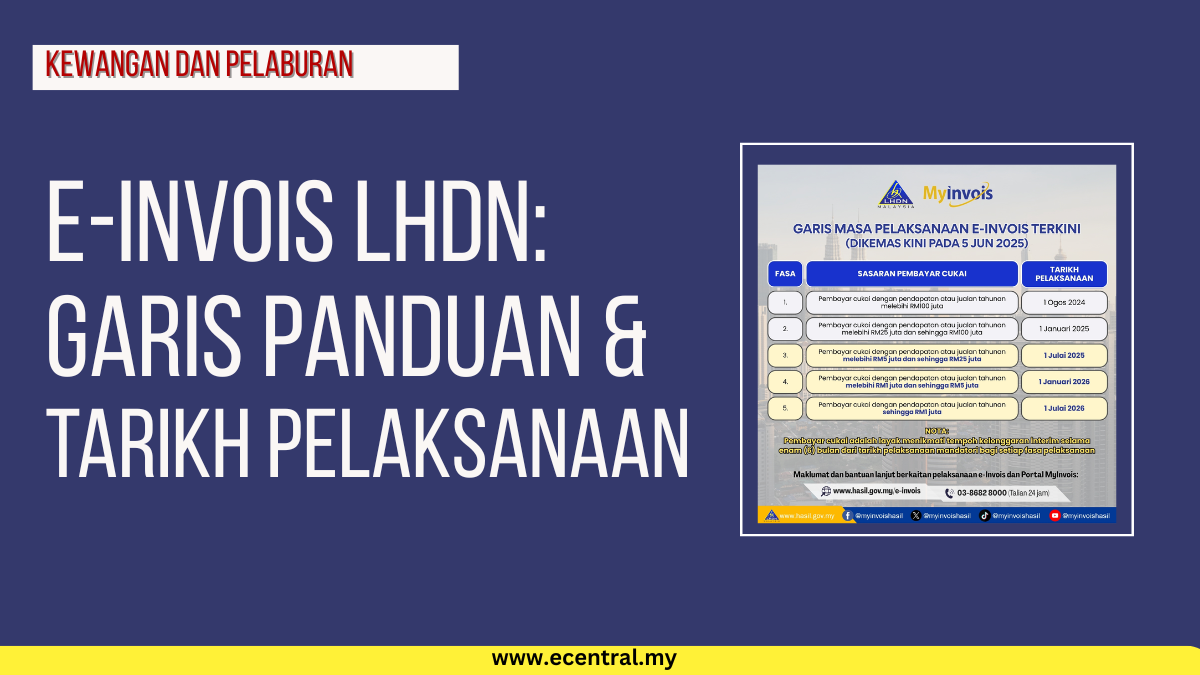
Latest Guidelines & Implementation Date
Many taxpayers and businesses are still not aware of e-invois.
What is E-Invois?
E-Invois is a digital transaction between the seller and the buyer. This can replace the use of invoices that are usually practiced in business transactions.
Traders can continue to use the existing invoice system as usual but for the purpose of tax compliance, they must be implemented, as announced in the 2024 budget.
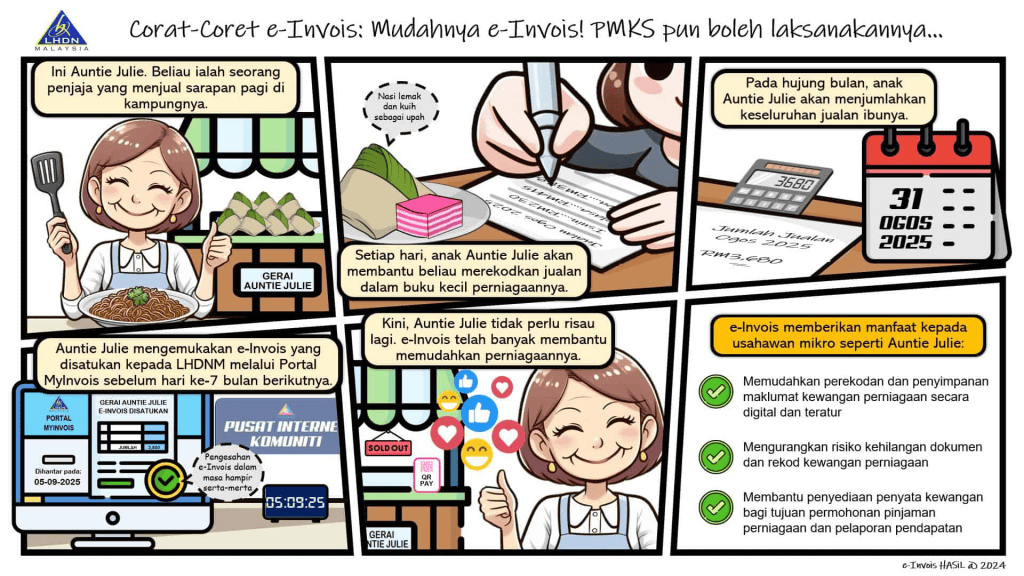
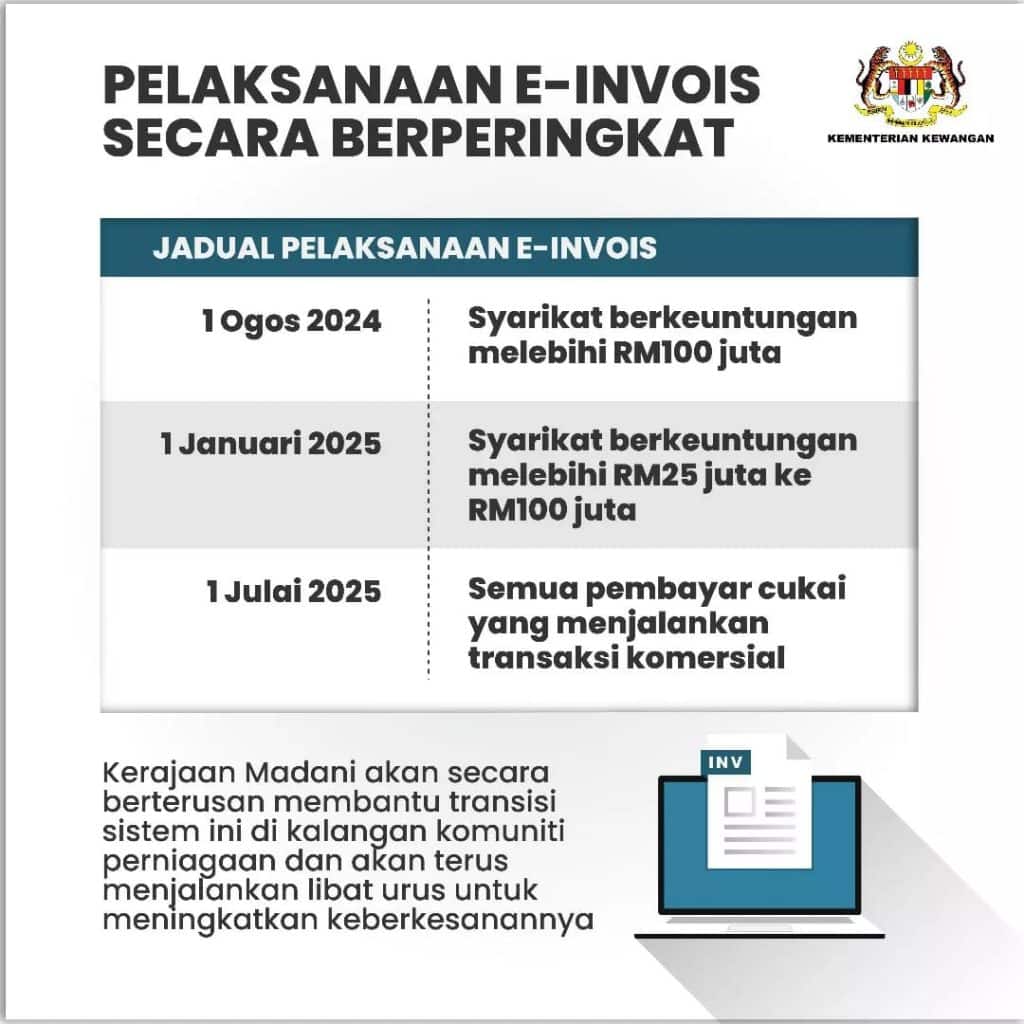
Starting on August 1, 2024, the Inland Revenue Council (IRB) has implemented the use of e-Invois gradually.
The implementation begins with a taxpayer that produces or achieves annual sales of more than RM100 million, before it is expanded to companies that produce RM100 million and below on January 1, 2025 and July 1, 2025.
The e-invois method will increase the efficiency and transparency of tax payments. This at the same time will ensure that tax payments are fair for all taxpayers, regardless of the level of income.
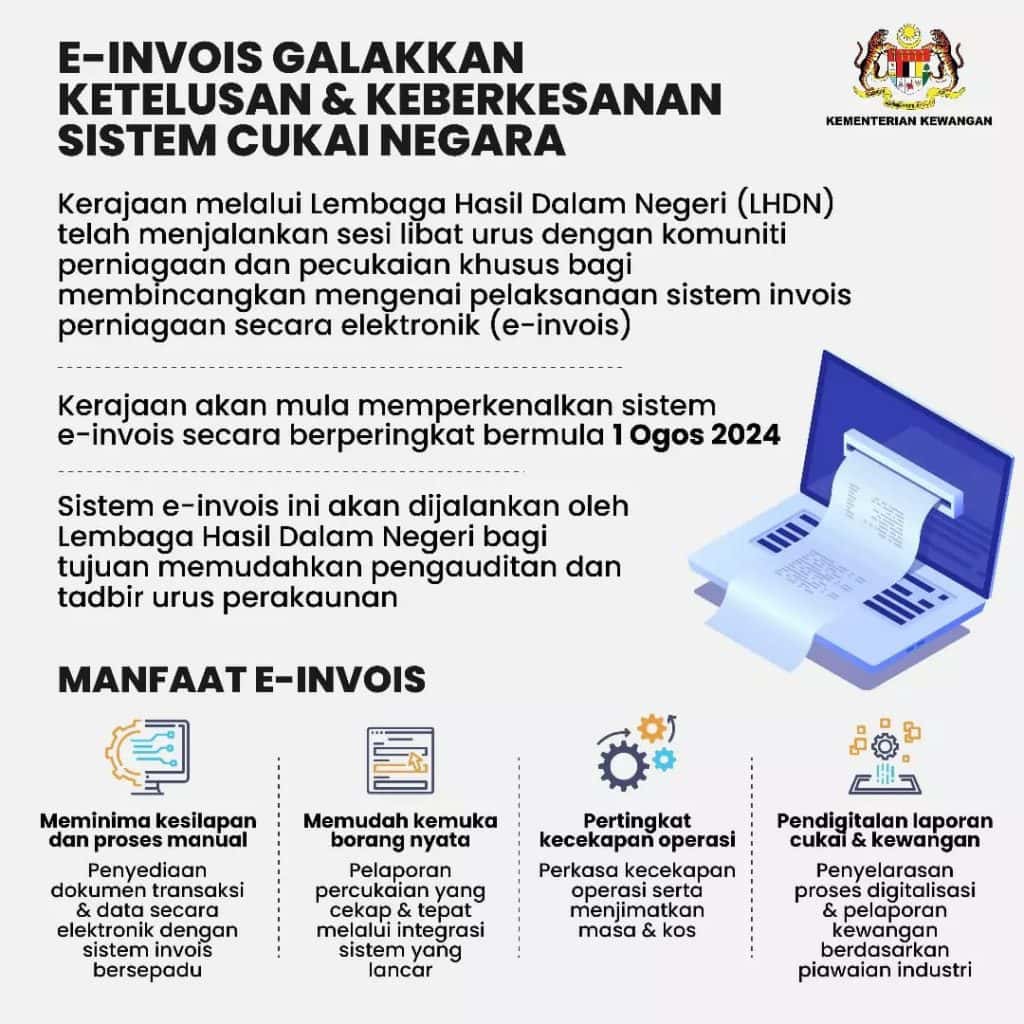
This effort is in line with the 12th Malaysia plan, where one of its main focus is to strengthen digital service infrastructure and bite tax administration.
E-Invois will allow confirmation and storage of real-time transactions, filling business-business (B2B), business-to-user (B2C) and business-to-government (B2G).
The following is shared about this system for all information, especially entrepreneurs.
What is E-Invois?
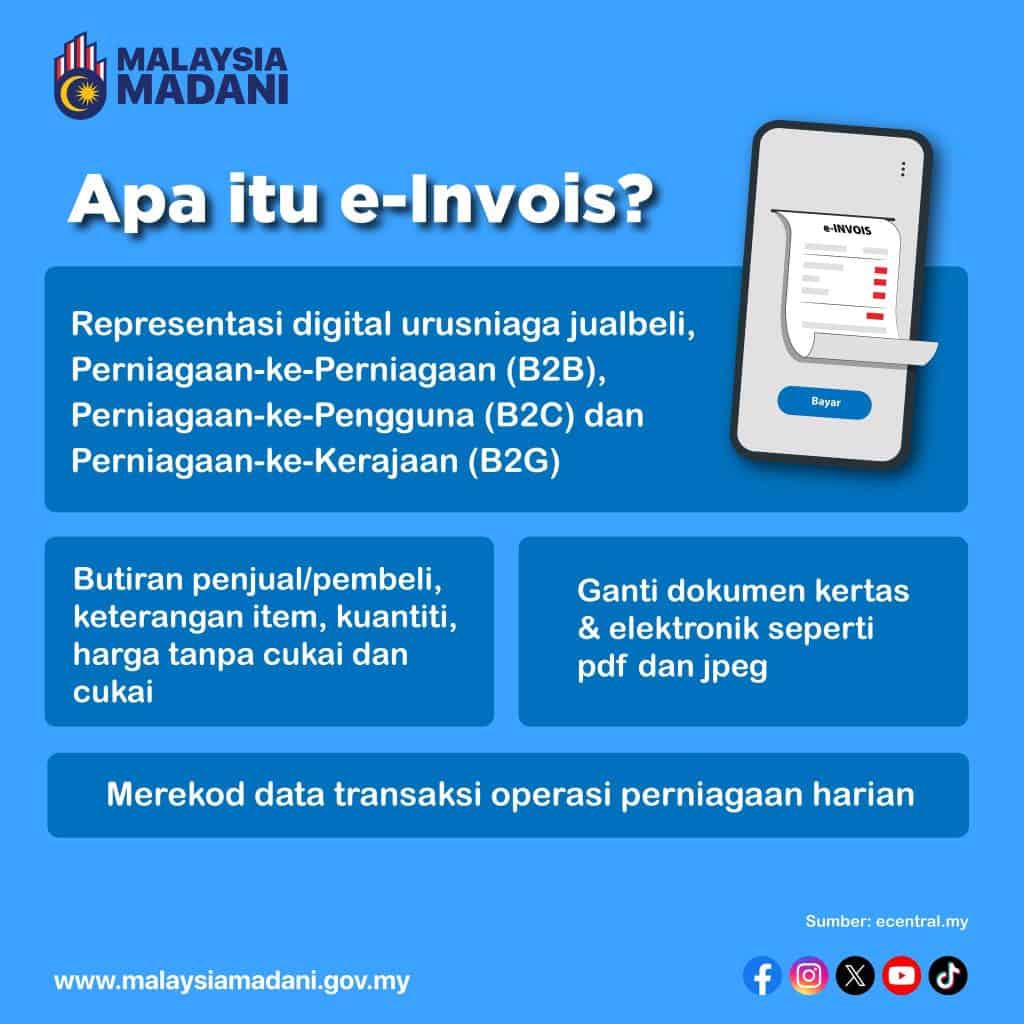
E-Invois is a digital representation of transactions made between seller and buyer, replacing the use of paper or electronic documents such as PDF, JPEG, DOC and others.
It contains the same important information as traditional documents, for example, the details of the seller and buyer, the description of items, quantity, tax -free price, tax and total, which records transaction data for daily business operations.
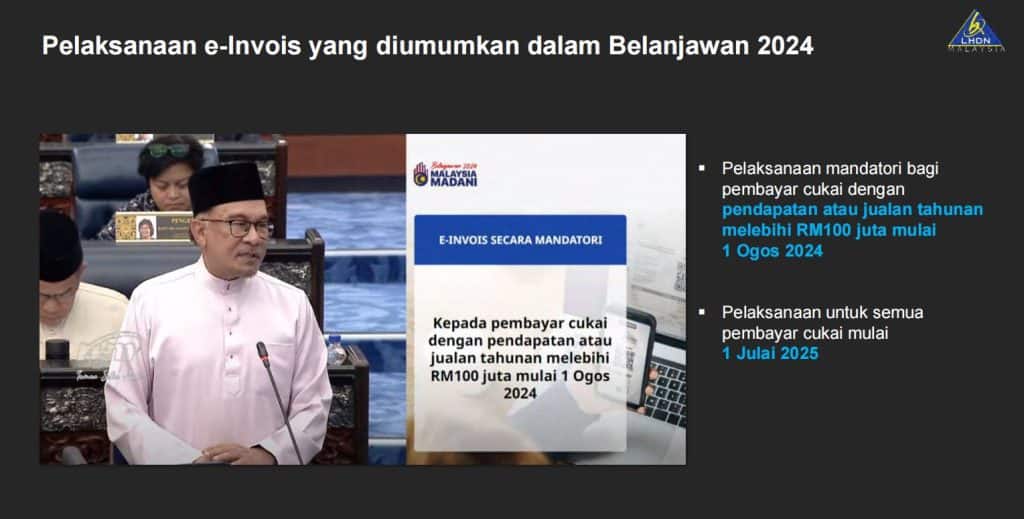
In the 2024 budget, PM announced the implementation of a compulsory taxpayer with an annual income or sales of more than RM100 million from August 1, 2024, while the implementation for all taxpayers began on July 1, 2025.
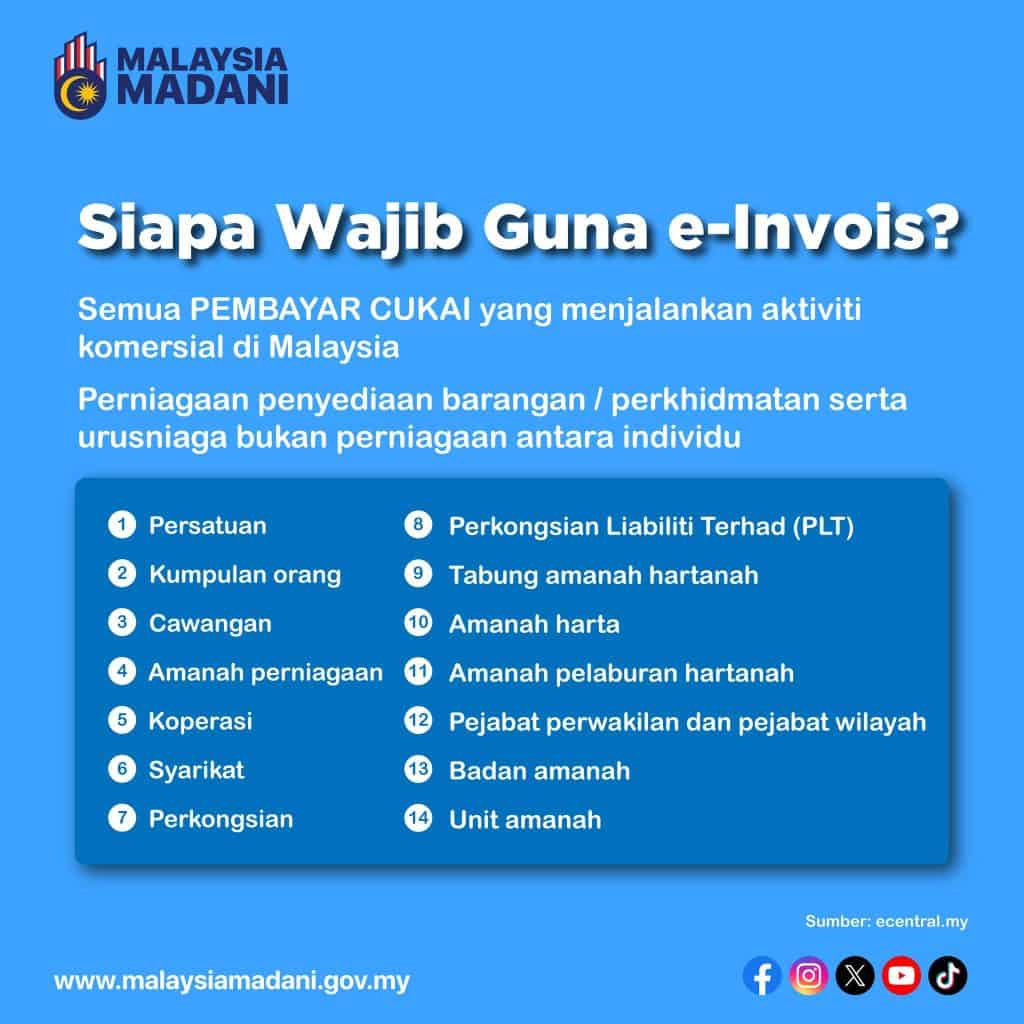
Who is obliged to use e-invoice?
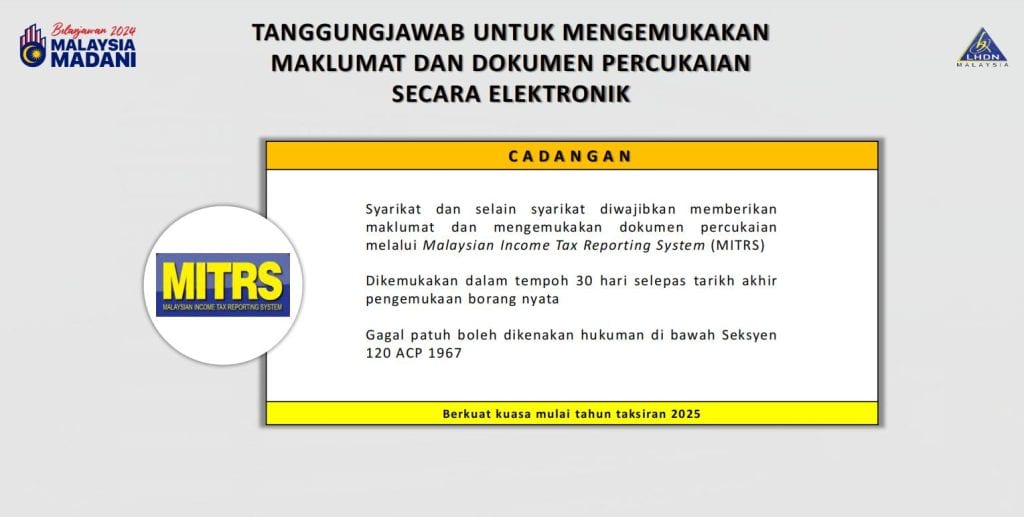
E-Invois applies to all taxpayers who carry out commercial activities in Malaysia. This includes businesses involving the supply of goods and services, as well as several non -business transactions between individuals.
All individuals and legal entities under the law are required to meet e-invois requirements, including:
1. Association;
2. group of people;
3. Branch;
4. Business trust;
5. Cooperatives;
6. Company;
7. Limited Liability Sharing (PLT);
8. Sharing;
9. Real Estate Trustees Funds;
10. Trust of Trust;
11. Real Estate Investment Trust;
12. Representative Office and Regional Office;
13. Body of Trust; And
14. Trust Unit.
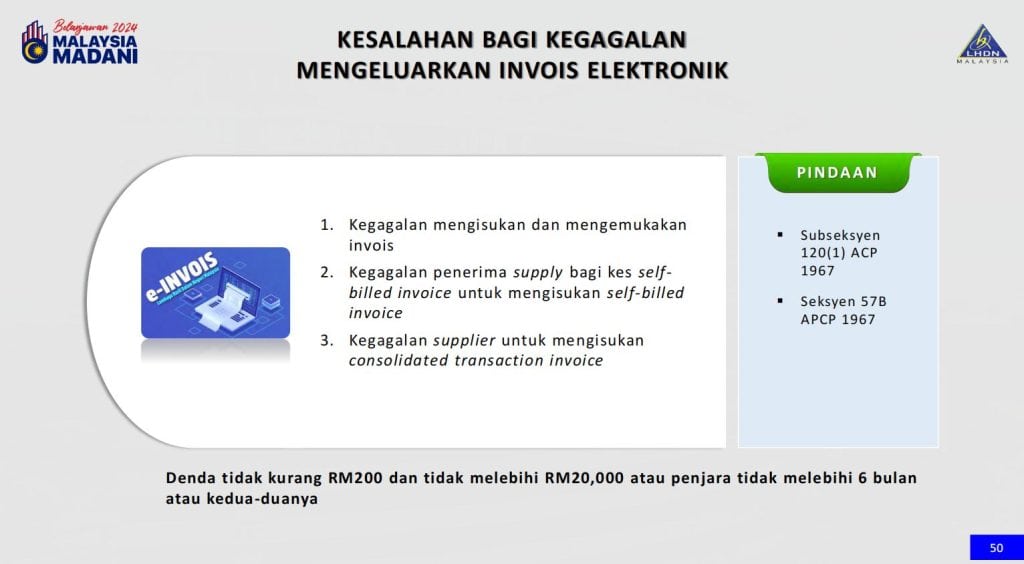
What is the purpose of E Invois?
The whole world needs to be prepared for the digital economy. Many countries have started invoices. To support digital economic growth, e-Invois is carried out in an effort to improve the efficiency of state tax administration management
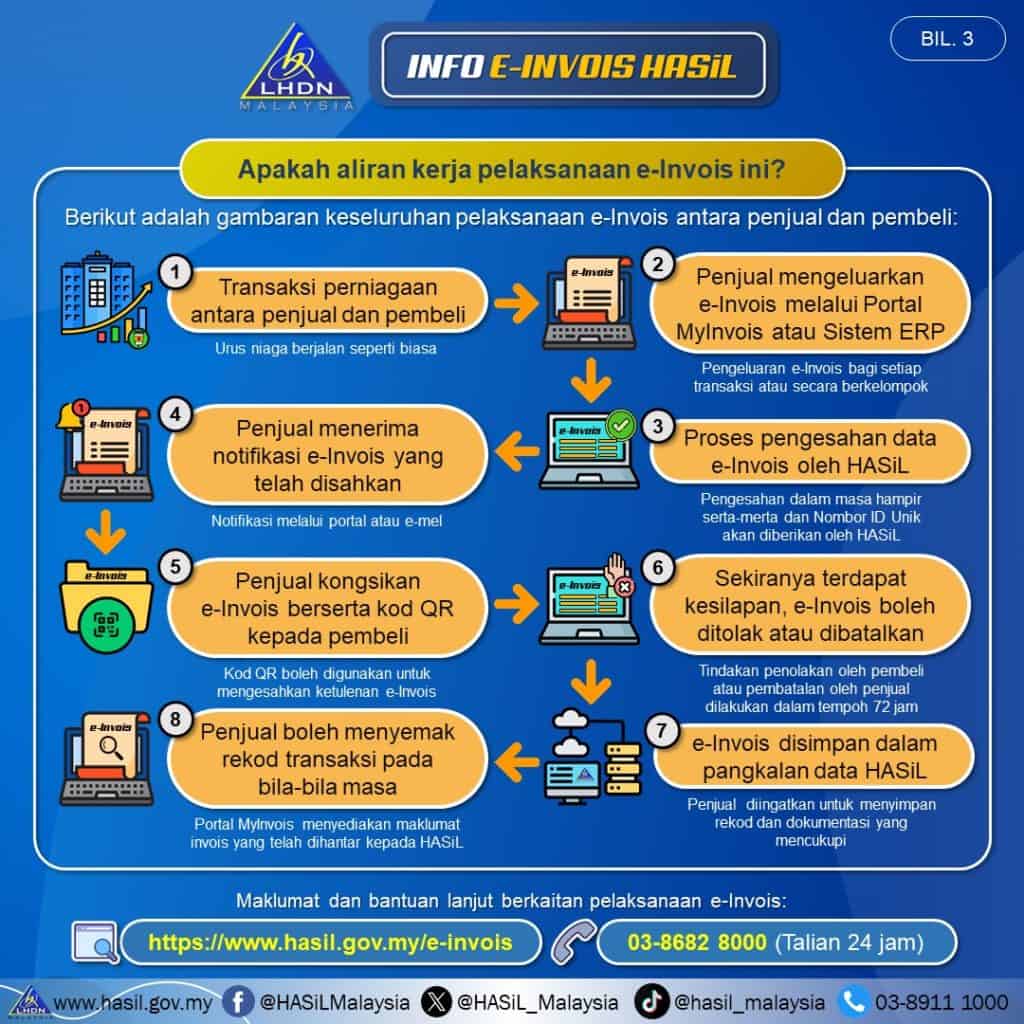
How did Einvois removed?
The seller can issue einvois well Myinvois portal developed by income or through application programming interfaces (for large -scale businesses)
Interesting Articles: E-Billing IRB: Review Bill Number for Tax Payment
Benefits & Strengths
E-Invois implementation will increase the efficiency and launch operation
Taxpayer business and increase the level of tax compliance and here there are other benefits that will be obtained with this introduction:
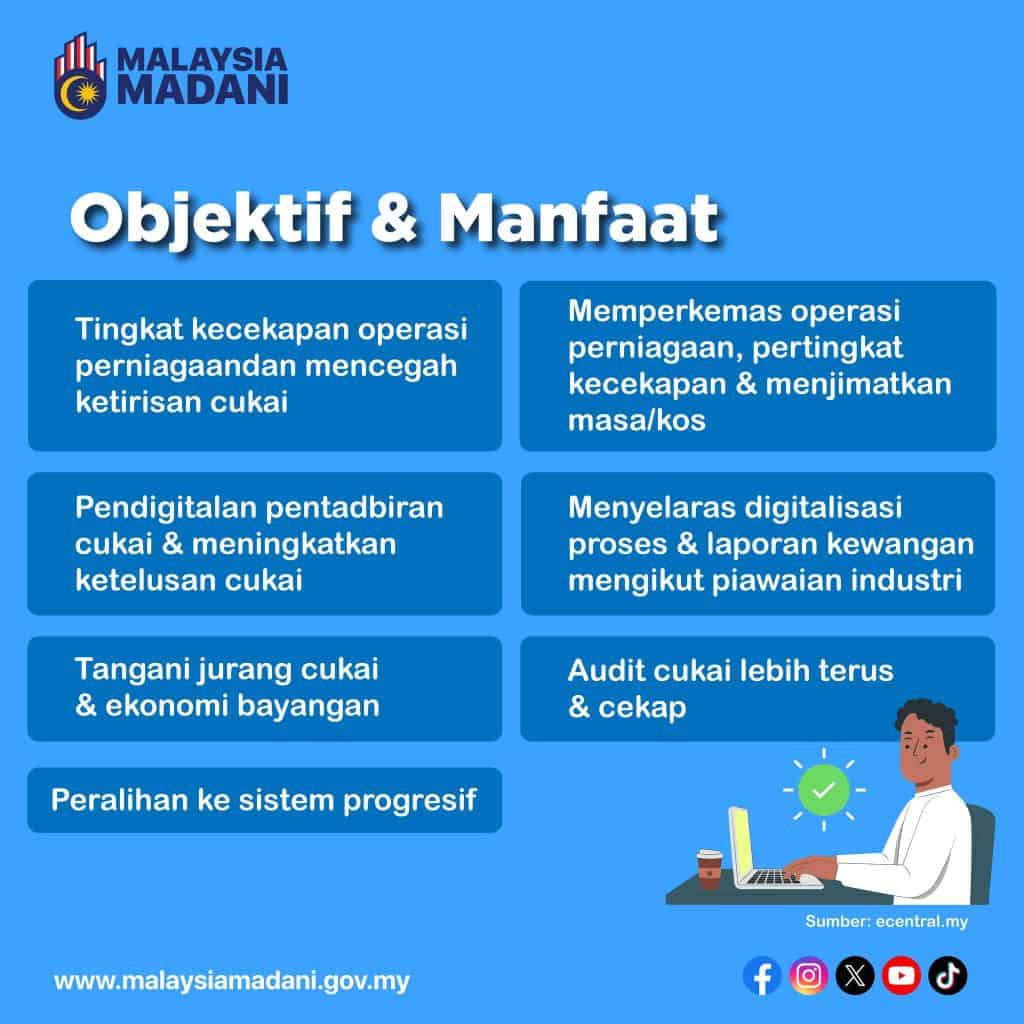
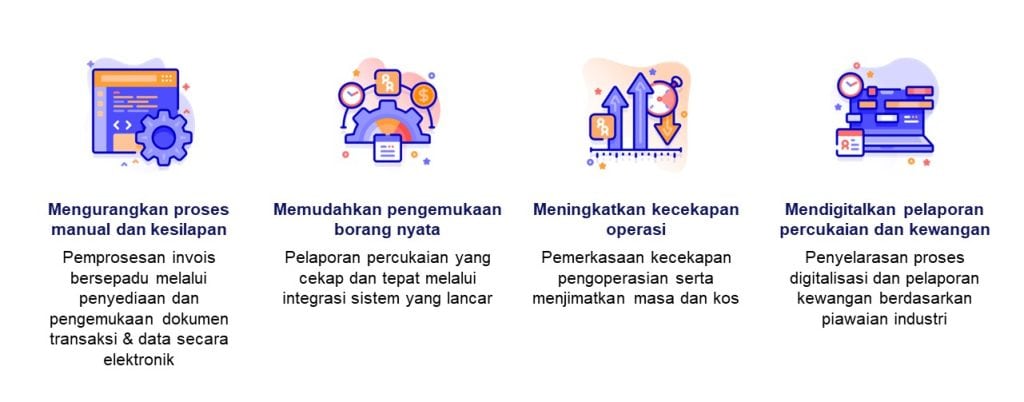
- The process of preparing an invoice manually has been summarized through
Document preparation and submission of electronic invoices.
This invoice data entry automation also reduces errors
and manual process by taxpayers. - Facilitating the submission of real forms through smooth system integration for efficient and accurate tax reporting purposes.
- For large companies, the implementation of e-invois can streamline business operations, increase efficiency and save time and costs through the automation process, smooth data integration and more efficient invoice management;
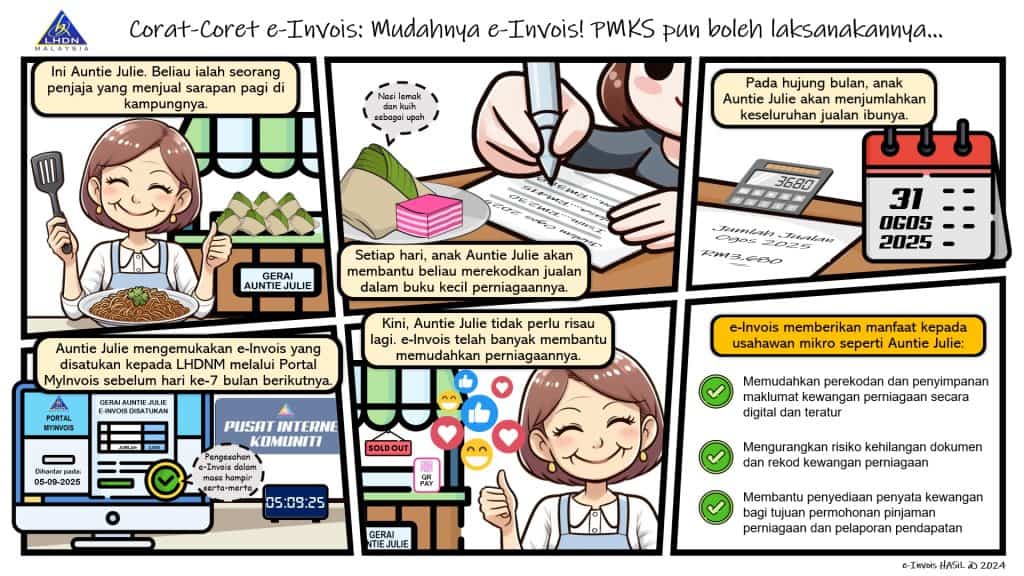
- For micro, small and medium enterprises (PMK), the implementation of gradual e-invois can ensure that the transition to the new system is more progressive and controlled. In addition, PMK can also coordinate the digitization of work processes and financial reporting in accordance with industrial standards
> Get Consultation Consultation Form B/BE/P (E-Representation)
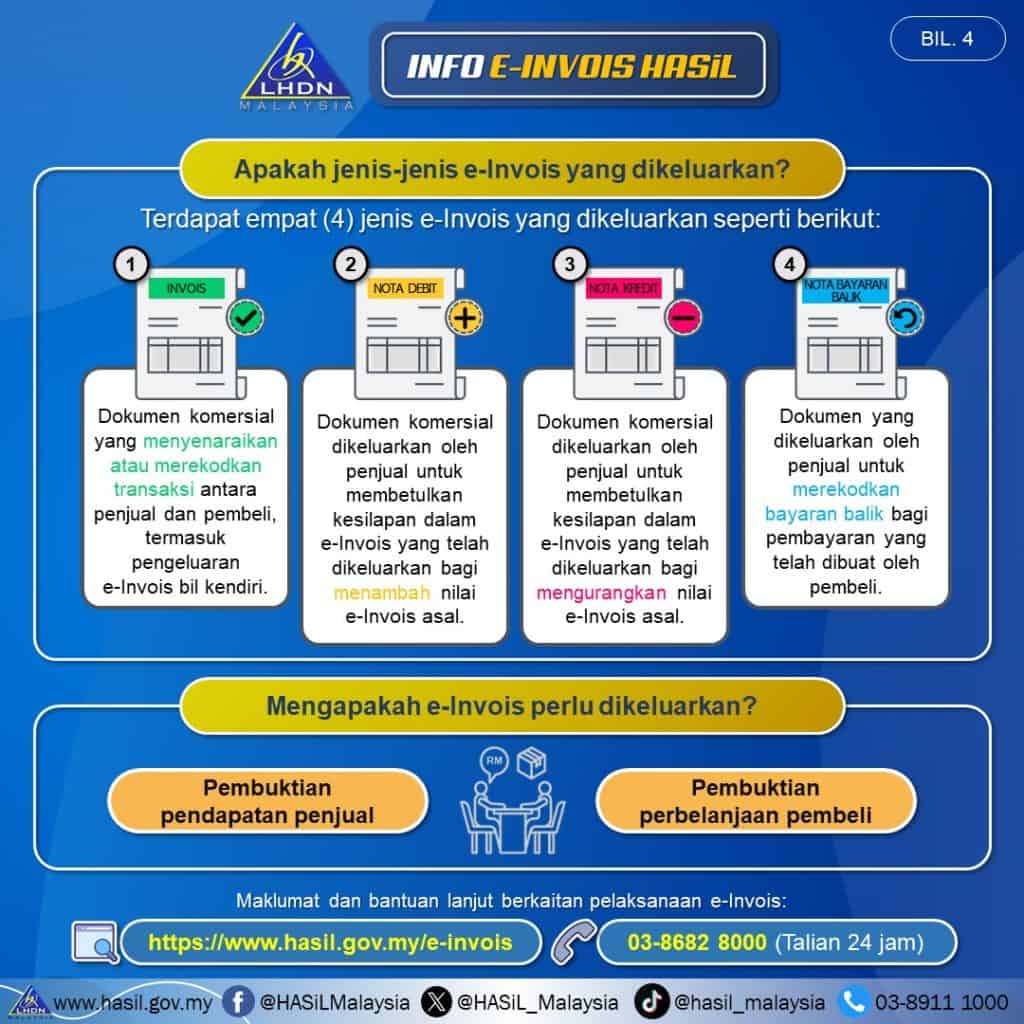
Type of E-Invois IRB
- Invois: Commercial documents that include or record
Transactions between sellers and buyers, including the withdrawal of e-invois themselves
such as documenting expenses with foreign sellers. - Credit Notes: Credit records issued by the seller to correct errors, giving discounts or return records at e-invoisang have been issued previously with the aim of reducing the value of the original e-invois. This is also used in situations where the reduction in original e-invois does not involve refunds to the buyer;
- Notes: Debit notes incurred to show additional costs in e-Invois previously incurred; And
- Record Note: Note Refund is a document issued by the seller to confirm the payment return that has been made by the buyer. This is used in situations where there is a return to the buyer.
Execution date
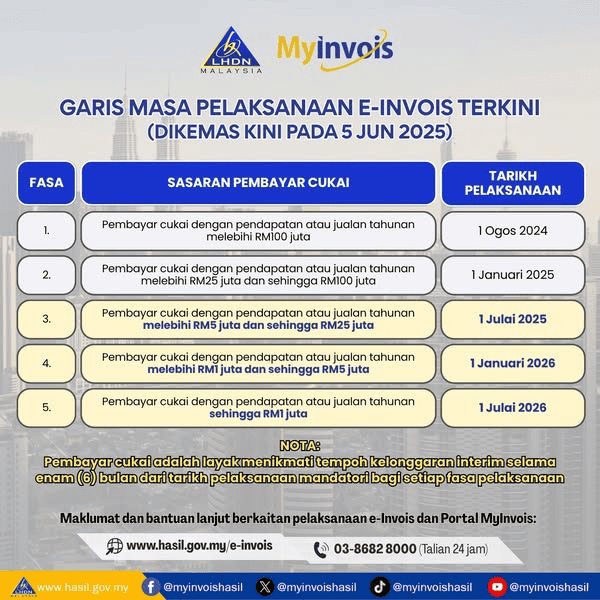
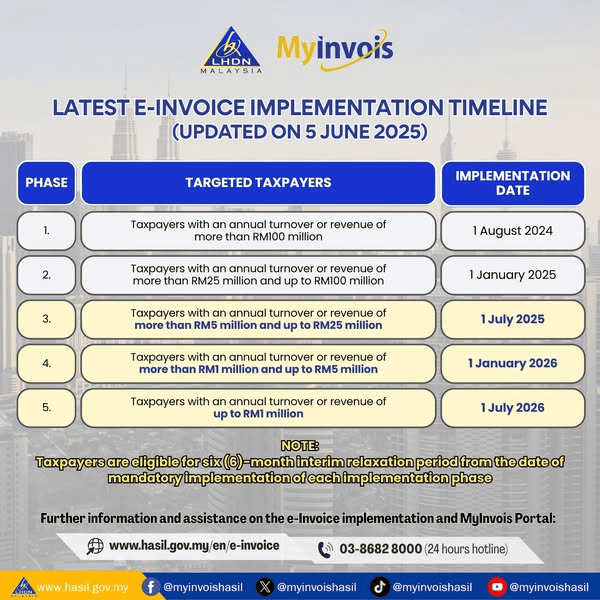
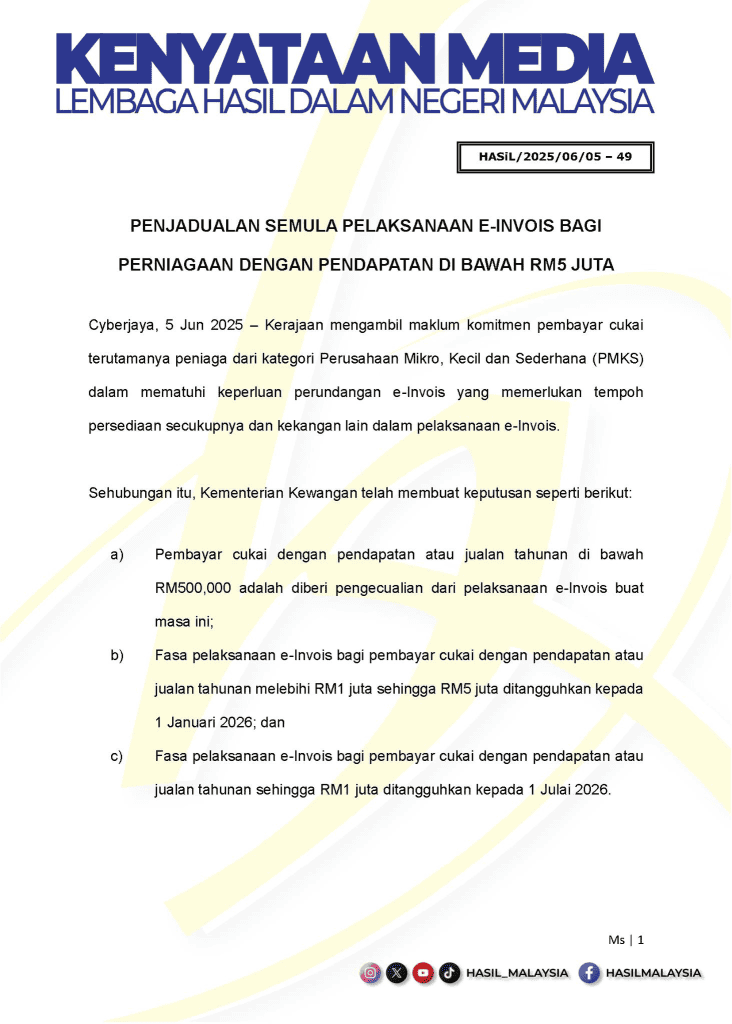
The following is the E-Invois implementation timeline distributed by the Inland Malaysian Revenue Council (IRB) (updated on June 5, 2025).
This table sets the date of mandatory implementation e-invois based on the category of income or annual sales of taxpayers.
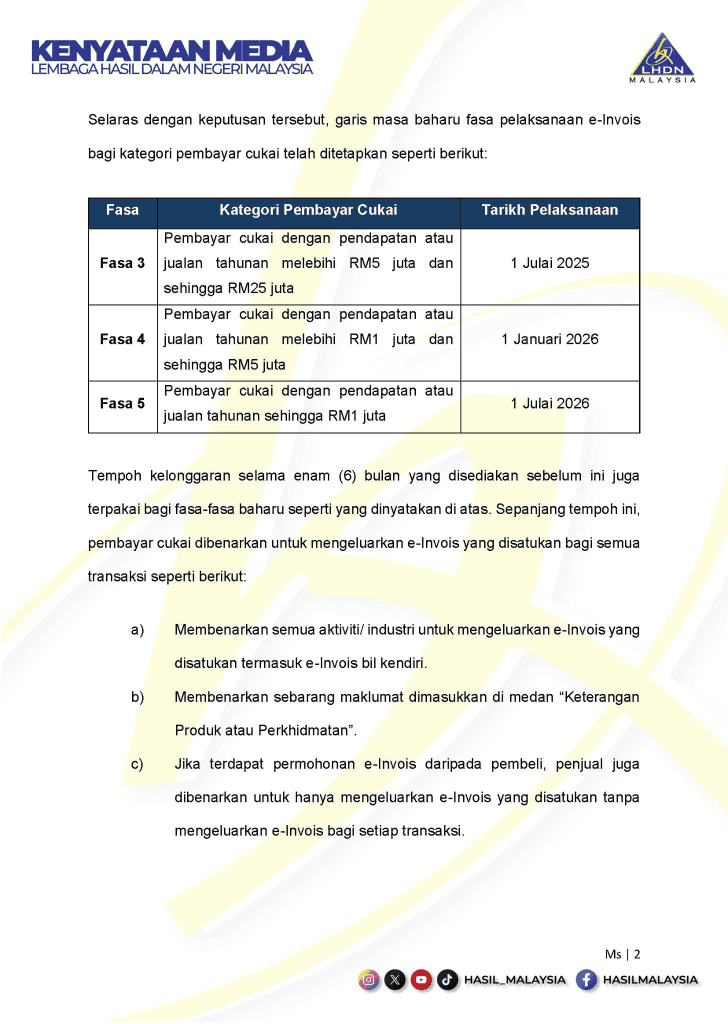
Phase and Category of Taxpayers
| Phase | Taxpayer category | Execution date |
|---|---|---|
| 1 | Annual acquisition/income exceeds RM100 million | August 1, 2024 |
| 2 | Annual acquisition/income exceeds RM25 million to RM100 million | January 1, 2025 |
| 3 | Annual acquisition/income exceeds RM5 million to RM25 million | July 1, 2025 |
| 4 | Annual acquisition/income exceeds RM1 million to RM5 million | January 1, 2026 |
| 5 | Acquisition/annual income so that RM1 million | July 1, 2026 |
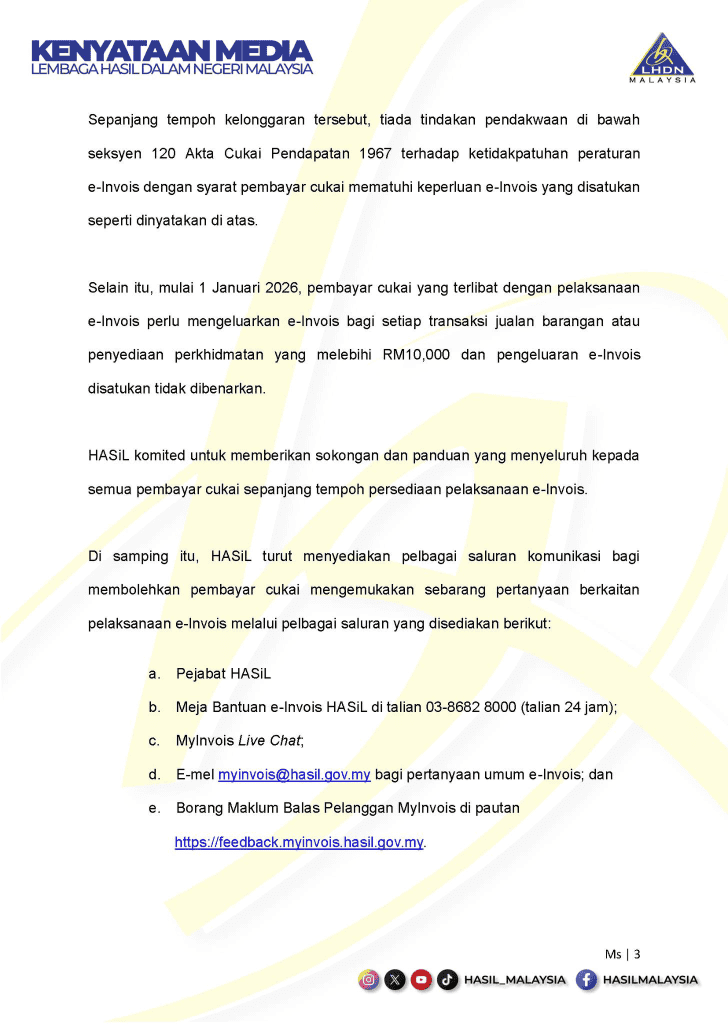
Use: Each Taxpayer Category has the right to a temporary relaxation period of 6 months starting from the date of the mandatory implementation for each phase.

LHDN E-Invois Guidelines
General Guidelines for E-Invois (Version 2.0) and E_invois Specific Guidelines (Version 1.0) can now be accessed on the income portal
Specific guide line explains in general the following transactions:
- Transactions involve buyers
- Statements or bills are provided regularly
- Disbursement and refund (replacement)
- Perkuisit and employee benefits
- Happiness is spent by employees on behalf of the employer
- Transactions that involve payments in financial form for agents, distributors or distributors
- Cross transactions -Border
- Profit distribution
- Foreign Income
- Foreign Currency Exchange Rate
- Overview of the Application Programming Interface (API)
- Cyber security
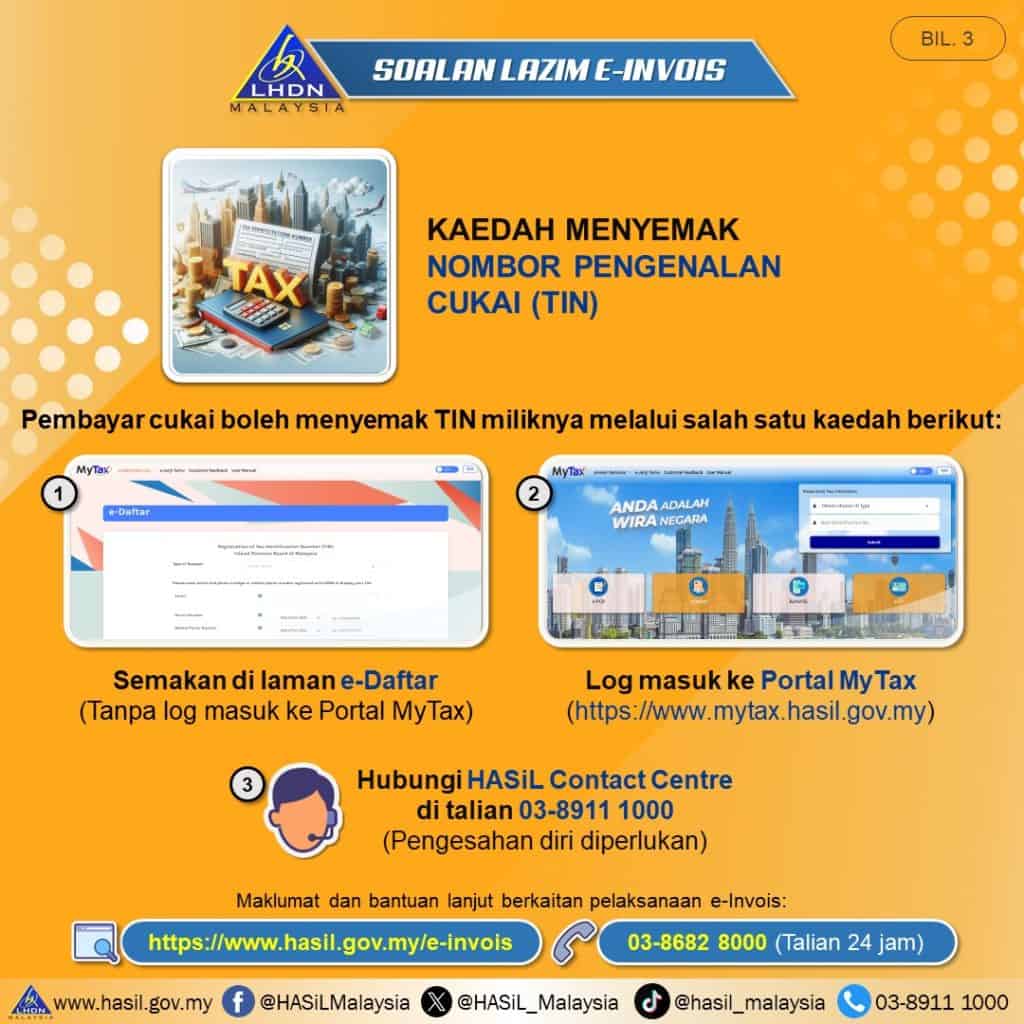
E_invois faq – Method of reviewing the Tax Identification Number (TIN)
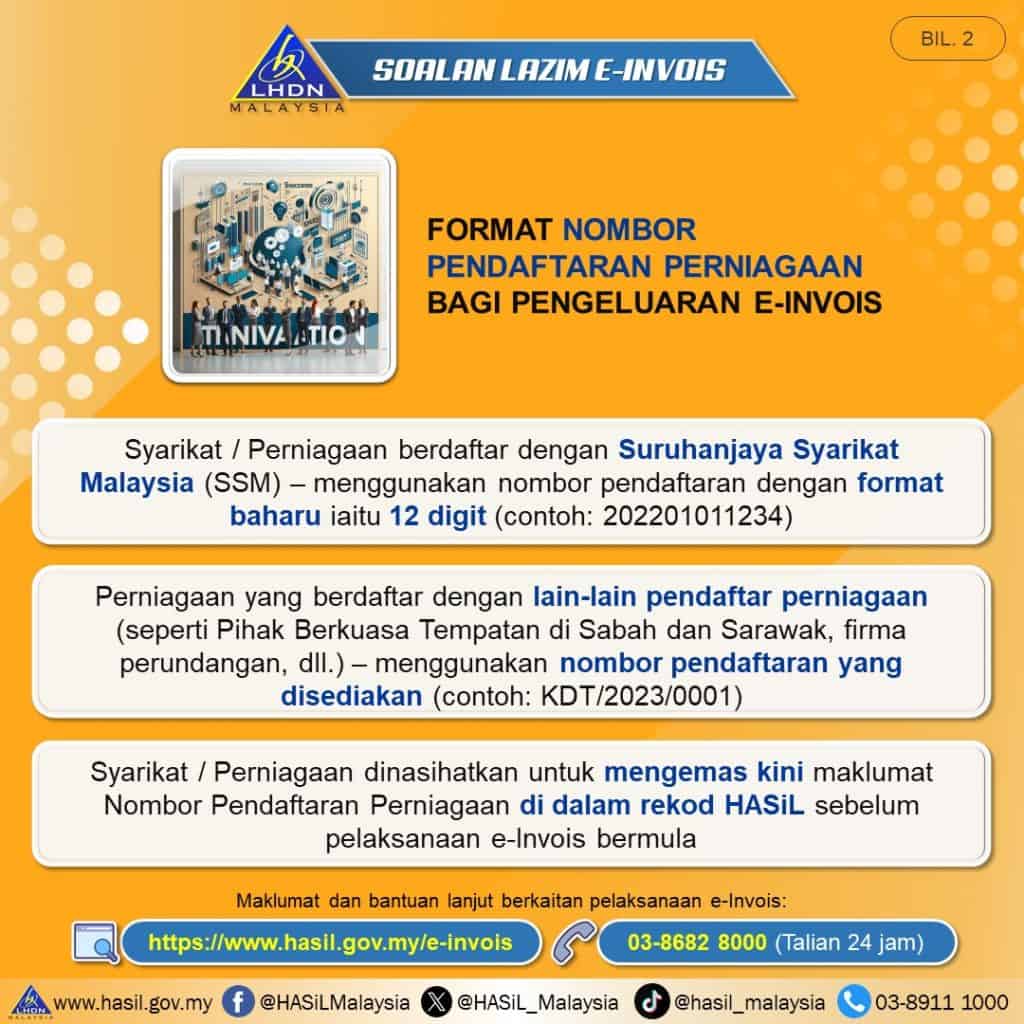
Format of Business Registration Number for Einvois Withdrawal
Further information
For complete information and up -TO -Date, please visit the website at the link
Game Center
Game News
Review Film
Berita Olahraga
Lowongan Kerja
Berita Terkini
Berita Terbaru
Berita Teknologi
Seputar Teknologi
Berita Politik
Resep Masakan
Pendidikan
Berita Terkini
Berita Terkini
Berita Terkini
review anime
Gaming Center
Originally posted 2025-06-08 08:17:48.