2026 SKAS Payment Date (Sarawak Basic Food Contributions)
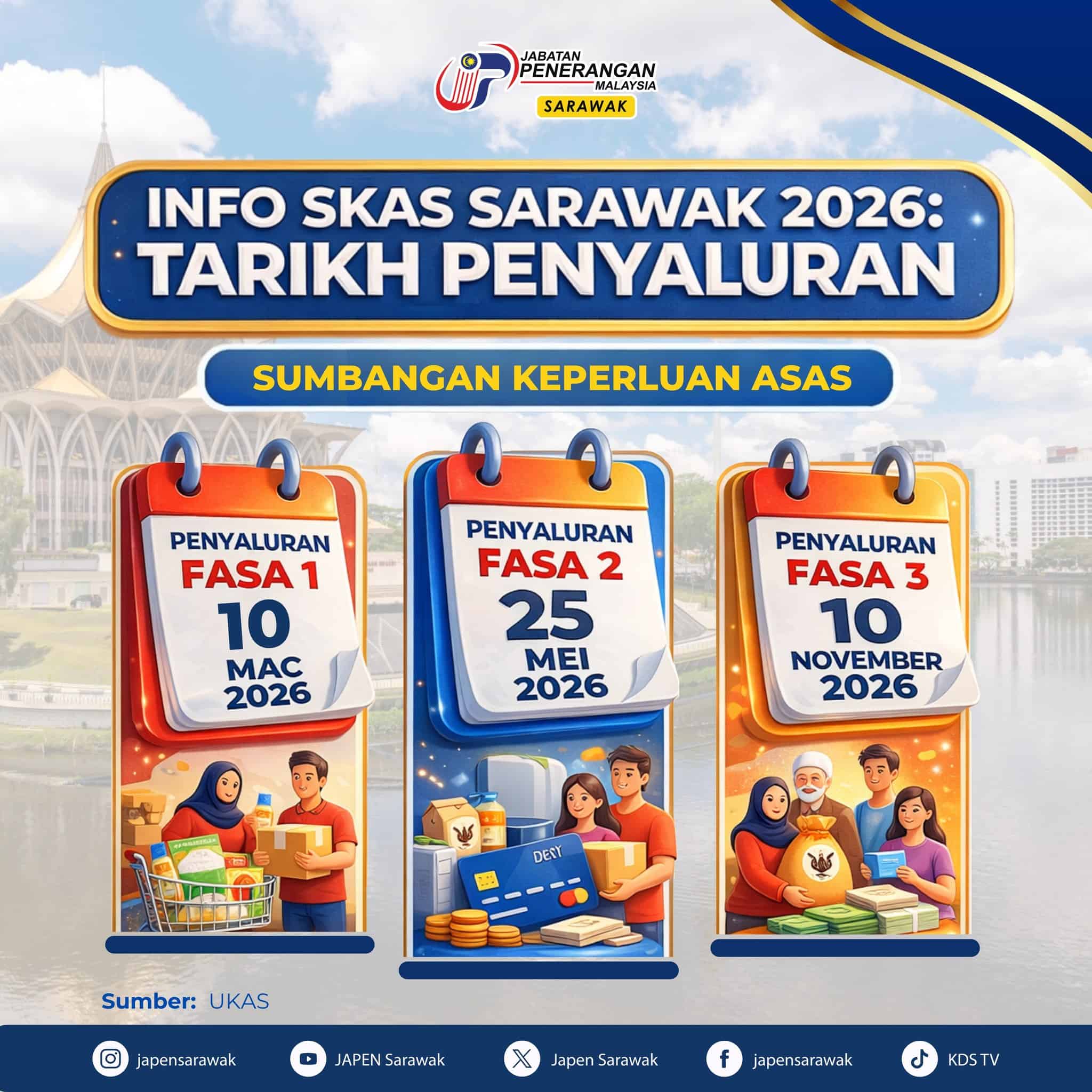
The 2026 SKAS Payment Date corresponds to three stages, namely 10 MARCH 2026 (Tuesday) for Stage 1, 15 MAY 2026 for Stage Two and 10 NOVEMBER 2026 for Stage Three via SPAY Global.
On 16 April 2026, the Sarawak Government announced an increase in SKAS assistance by RM136.2 million as a step to help the state’s people overcome the impact of conflict in the Middle East.
The Prime Minister of Sarawak, Abang Johari Tun Openg, informed that the 2026 Sarawak Basic Needs Donation (SKAS) assistance will benefit nearly 900,000 beneficiaries consisting of eligible households, the elderly and single individuals.
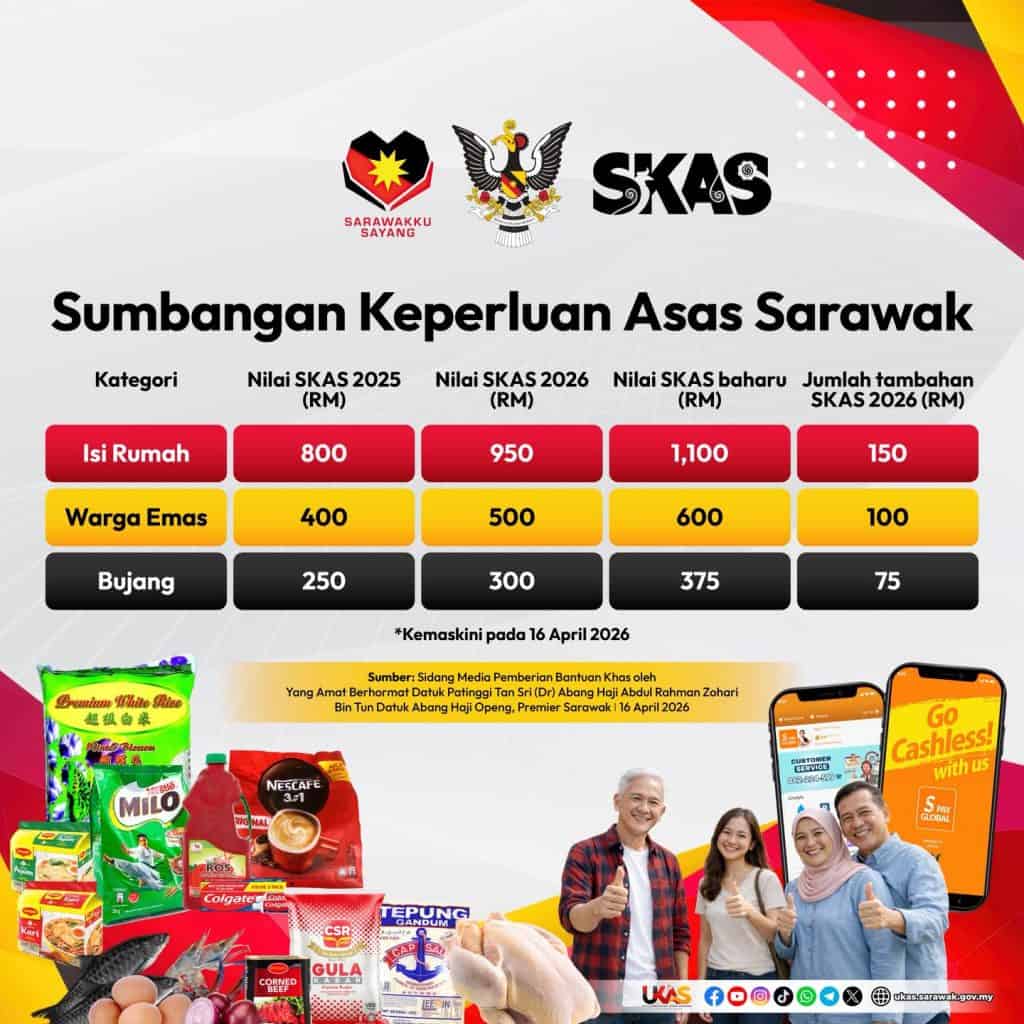
Households now receive RM1,100 compared to RM950 previously, senior citizens receive RM600 compared to RM500, while single individuals receive RM375 compared to RM300.
Overall, the Sarawak Government’s financial allocation for the implementation of SKAS in 2026 increased to RM680.0 million compared to the original amount of RM543.8 million in the previous year.

SKAS 2026 Payment Date Summary
- SKAS 2026 (Sarawak Basic Food Donations) will be distributed in 3 stages in 2026, namely approximately once every 4 months, via the S Pay Global e-wallet to eligible recipients.
- Phase 1 – Starting on March 10, 2026
- Phase 2 – Starting on May 15, 2026
- Phase 3 – Starting on November 10, 2026
- Payments are credited in stages, not all at once, and recipients need to check the status via S Pay Global or the official SKAS portal to ensure whether the assistance has arrived.
What is SKAS (Rahman Basic Needs Donation)?
Sarawak Basic Needs Donation (SKAS) is an initiative introduced by the Sarawak Government to help ease the financial burden of Sarawakians, especially low-income groups.
This program aims to help people get access to basic needs such as food and other daily necessities.
Among the eligibility criteria for recipients is that only Sarawakian children holding a “K” Identity Card have an address and reside in Sarawak and the three categories of eligible recipients are households, singles and seniors without a partner and without children.

The implementation of SKAS provides many benefits for the people of Sarawak, including:
- Ease financial burden: SKAS can help ease the financial burden of meeting basic needs.
- Driving economic growth: By increasing people’s purchasing power, SKAS can indirectly encourage economic growth in Sarawak.
- Improving living standards: The assistance provided can help improve the recipient’s standard of living.
Target SKAS recipients
SKAS targets several categories of beneficiaries, including:
Category 1: Home Contents
- Married; or
- Single Mother/Father/Widow/Widower/Divorced with dependents (children/parents);
- Gross monthly income of RM5,000 or less; And
- There is no age limit.
Category 2: Single
- Not married; or
- Single Mother/Father/Widow/Widower/Divorced without dependents;
- Gross monthly income of RM2,500 or less;
- Aged between 21-59 years; And
- OKU (Persons with Disabilities) Singles aged 19 years and over.
Category 3: Golden Citizens without spouse or children
- Not married; or
- Single Mother/Father/Widow/Widow/Divorce without children;
- Gross monthly income of RM5,000 or less; And
- Aged 60 years and over.
If you meet one of the conditions in the categories above, then you can submit a SKAS appeal later.
SKAS Payment Date 2026
The following are the 2026 SKAS (Sarawak Basic Food Donations) payment dates that have been announced:
SKAS Payment Schedule 2026
- Phase 1: March 10, 2026
- Phase 2: May 25, 2026
- Phase 3: November 10, 2026
USE:
- Payment made 3 times a year (every ±4 months)
- Credited by ranked via S Pay Global e-wallet
READ ALSO: SKAS Phase 2 – Dates, Revisions & Assistance Rates
Latest SKAS Assistance Levels
The amount of SKAS assistance provided varies according to the recipient category and their eligibility. For 2026, SKAS payments will increase according to the following categories (last update 16 April 2026):
Household (Income ≤ RM5,000)
- Annual assistance increases to RM1,100 (previously RM950).
- Value of Each Payment (Stage): RM366-RM368
Golden Citizens Without Spouse/Children (Income ≤ RM5,000)
- Annual assistance increases to RM600 (previously RM500).
- Value of Each Payment (Stage): RM200
Single Individual (Income ≤ RM2,500)
- Annual assistance increases to RM375 (previously RM300).
- Value of Each Payment (Stage): RM125
NOTE: SKAS payments will be distributed in 3 stages.
READ ALSO: SKAS 2026 – Revised Total Payments for Each Category
How to Register/Appeal SKAS 2026
SKAS 2026 applications and submissions can be made online via the official Sarawak portal or manually at the office/PPR, provided you are a Malaysian citizen living in Sarawak and meet the household income criteria.
The application and appeal process can be done online at the official link: [AKAN DIKEMASKINI]
Anyone wishing to submit a new application or SKAS appeal can fill in your information. The important thing is that every individual needs to register a Sarawak ID account first. For those who don’t have it, you can see the steps below.
How to request a SKAS appeal is as follows:
- Click
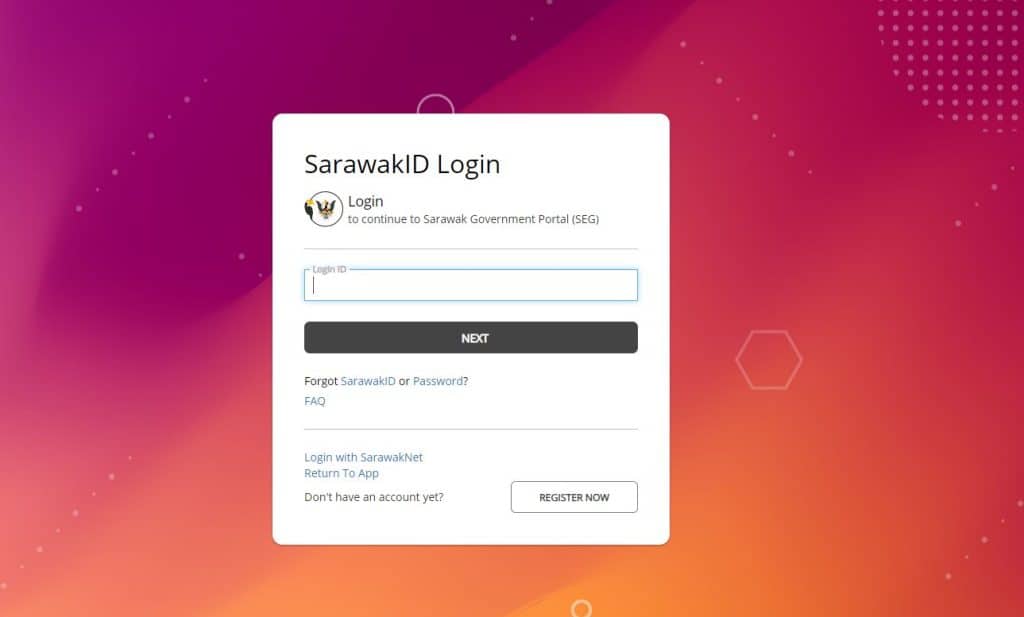
- Click ‘Register Now’
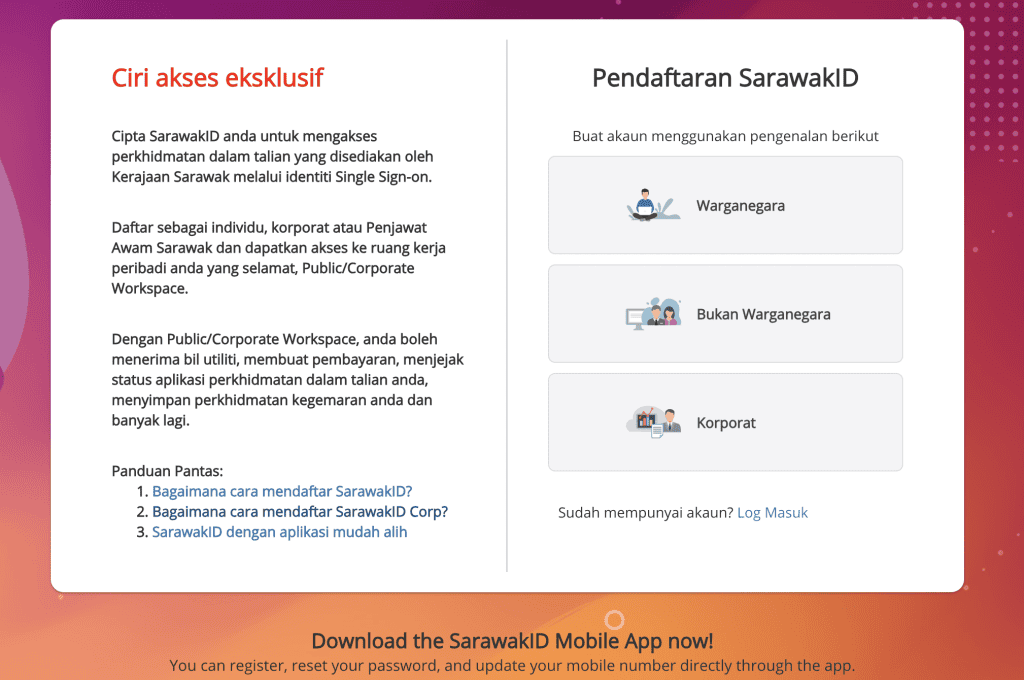
- Press ‘Malaysia’ / ‘Citizen’
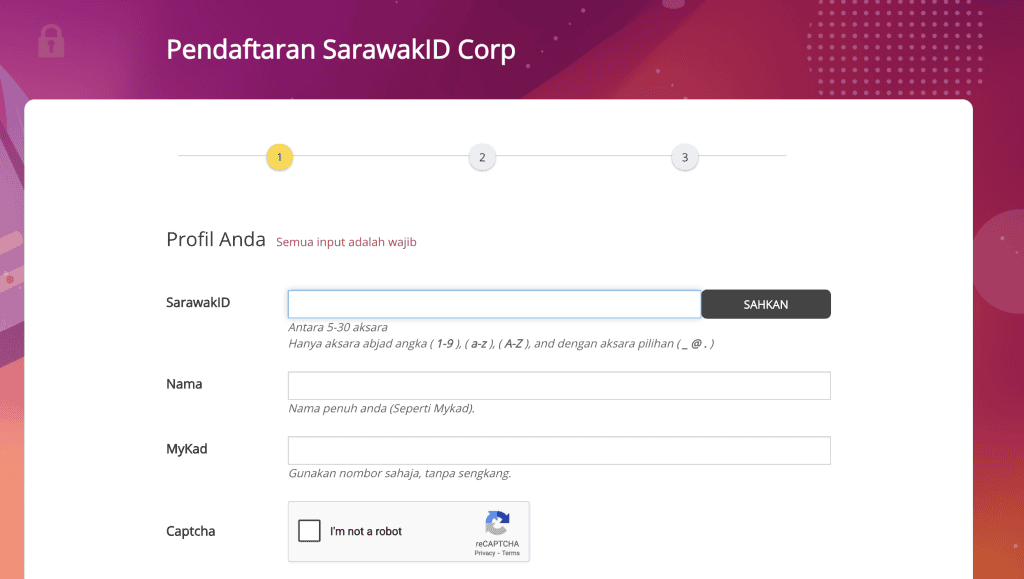
- Please fill in the information according to the instructions provided.
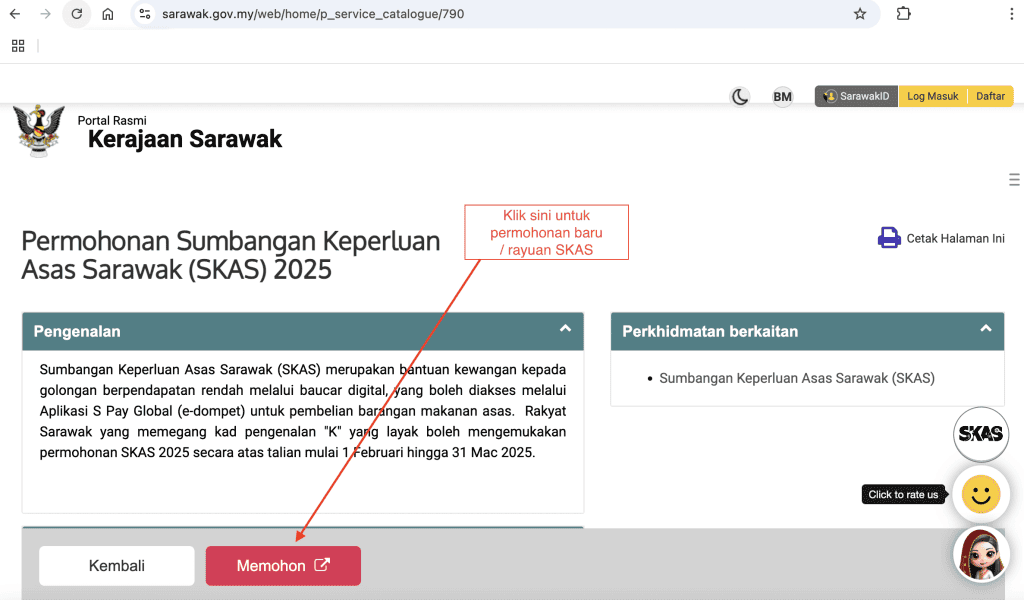
Login to Sarawak ID. If you don’t have an account yet, click ‘Register Now’.
Click ‘Citizen’ to continue registration.
Fill in your information in the blanks.
Continue by filling in the SKAS application form.
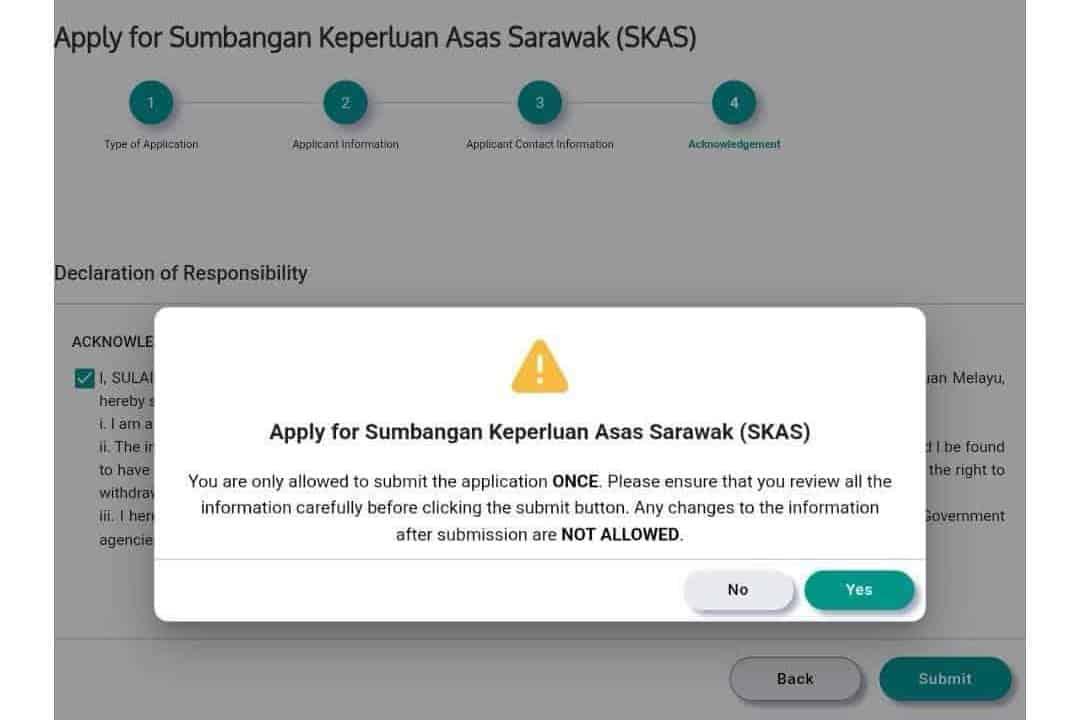
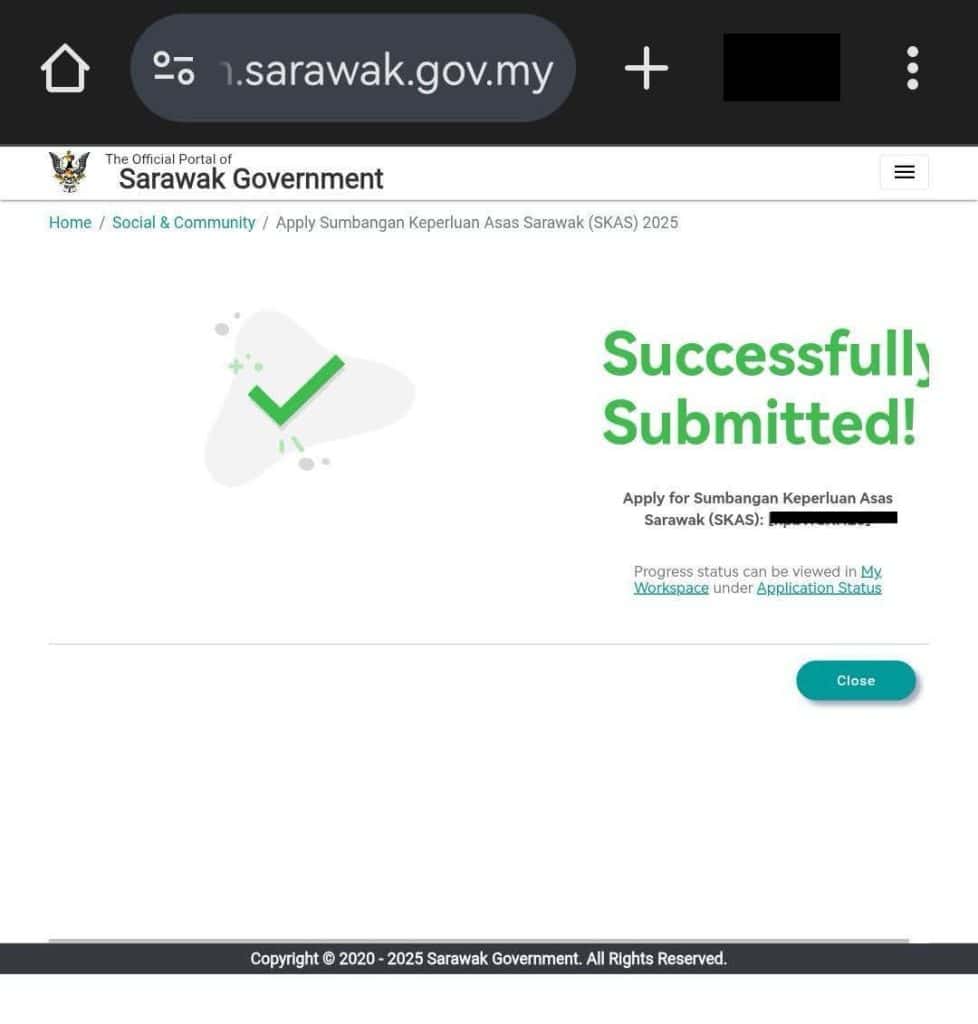
You can check the status after submitting the application form.
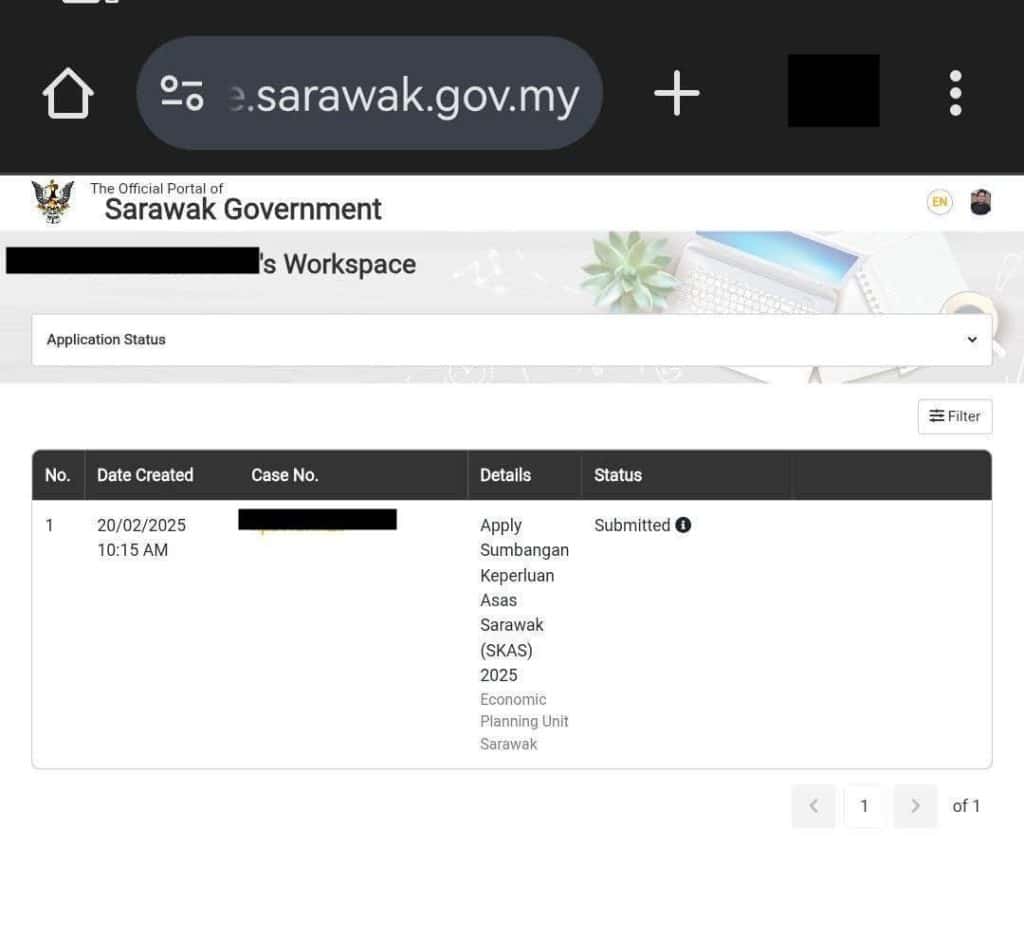
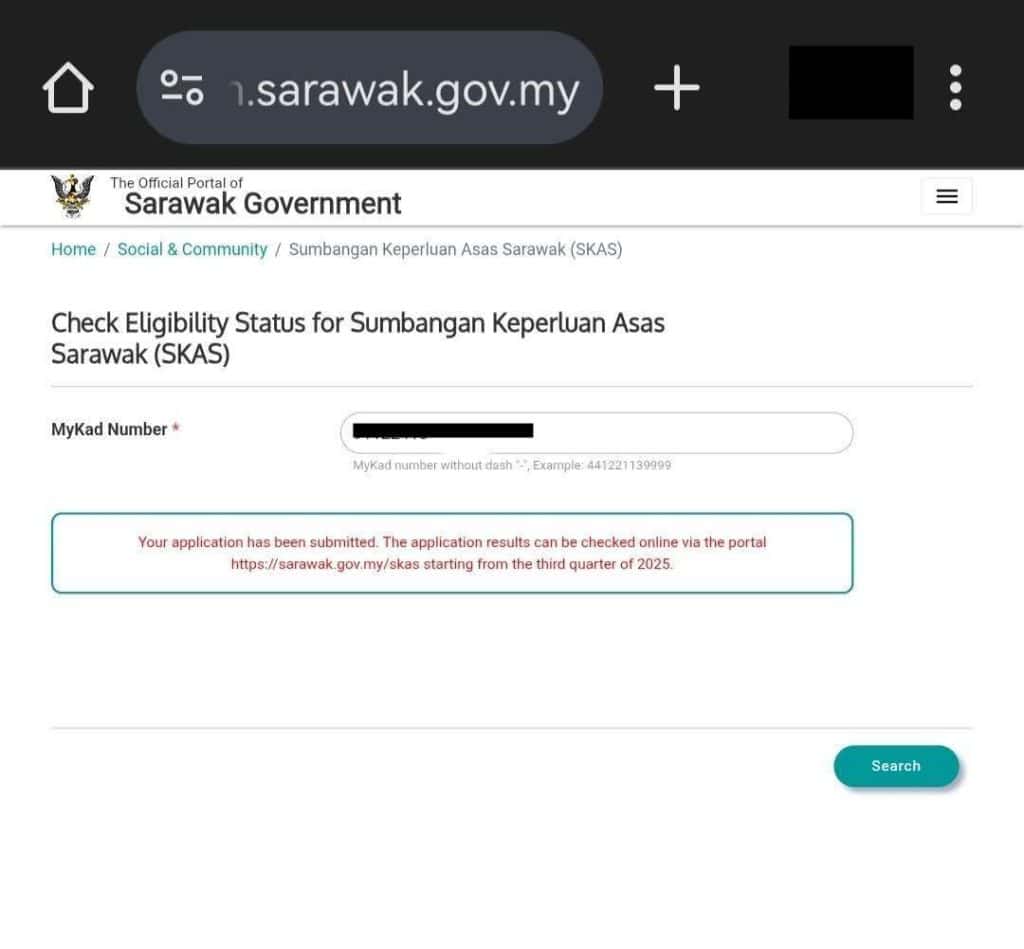
Finished.
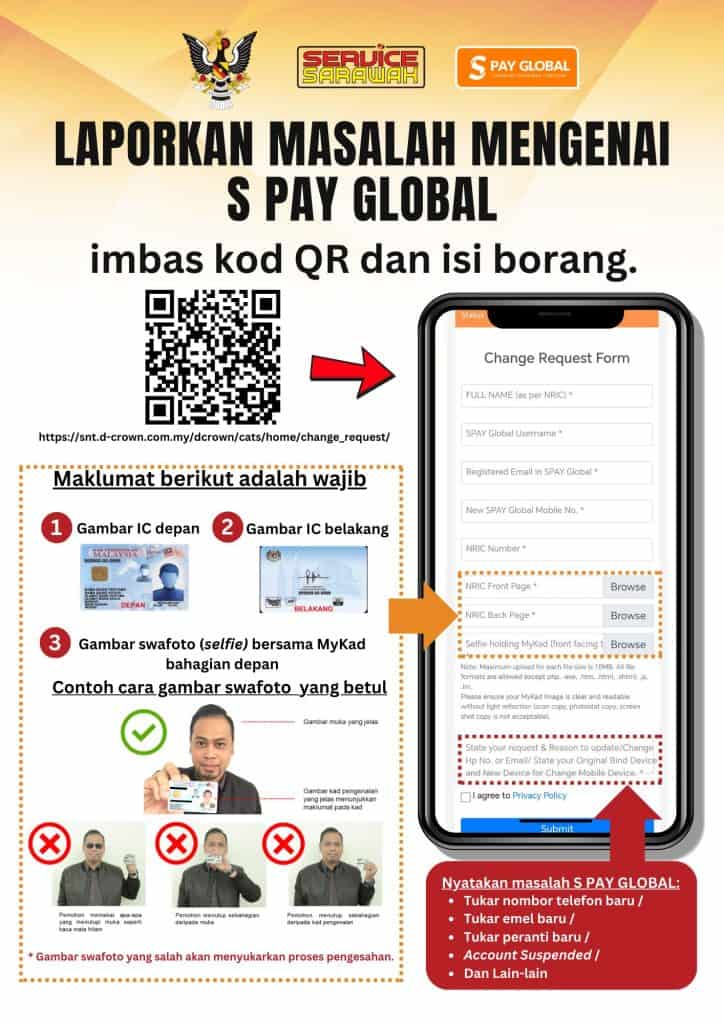
Report a Problem Online
No need to go out to the UTC counter or Service Sarawak, you can report a problem with your S PAY GLOBAL by scanning the QR code and filling in the following form.
More Information about SKAS Appeals
If you have questions regarding the SKAS appeal process, please refer to the official link, see the following guide:
Guide to S PAY GLOBAL
- How to register for S PAY GLOBAL (See guide)
- Forgot password and change phone number for S PAY GLOBAL (See guide)
- Replacing the phone used for S PAY GLOBAL (See guide)
Guide to SarawakID
Guide to SKAS
- Guide to creating a SKAS verifier account on the S PAY GLOBAL mobile application [ Infografik ].
- Guide to checking the status of receiving SKAS assistance [Video | Infografik].
- Guide to updating S PAY GLOBAL account information with SKAS [ Video | Infografik ].
For any questions regarding S PAY GLOBAL, you can refer to frequently asked questions about S PAY GLOBAL or contact us by phone +6082-224599 or email to [email protected].
For other questions, you can contact the Talikhidmat center by filling in the online form or calling +6082-555999 or email to [email protected]
SKAS 2026 Payment Date FAQ
The official crediting date for SKAS 2026 is March 10 2026 for Phase 1, May 15 2026 for Phase 2, and November 10 2026 for Phase 3.
No, SKAS 2026 is distributed three times a year, namely once every four months.
This assistance is credited directly via the S Pay Global e-wallet to eligible recipients.
Phase 2, which was originally scheduled for July 2026, was moved forward to May 15 2026, before Hari Raya Haji and Gawai 2026.
Household: RM1,100 (compared to RM950 previously).
Senior citizens: RM600 (compared to RM500 previously).
Single individual: RM375 (compared to RM300 previously).
Recipients can log in to the S Pay Global app and check their balance or transaction history to see if SKAS has been credited. Additionally, eligibility status can be checked via the official SKAS portal/relevant Sarawak government website.
SKAS 2026 payments are distributed in stages, not simultaneously to all recipients. Some recipients may receive payments slightly earlier or after the official date, depending on the data upload and verification process of S Pay Global e-wallet.
PakarPBN
A Private Blog Network (PBN) is a collection of websites that are controlled by a single individual or organization and used primarily to build backlinks to a “money site” in order to influence its ranking in search engines such as Google. The core idea behind a PBN is based on the importance of backlinks in Google’s ranking algorithm. Since Google views backlinks as signals of authority and trust, some website owners attempt to artificially create these signals through a controlled network of sites.
In a typical PBN setup, the owner acquires expired or aged domains that already have existing authority, backlinks, and history. These domains are rebuilt with new content and hosted separately, often using different IP addresses, hosting providers, themes, and ownership details to make them appear unrelated. Within the content published on these sites, links are strategically placed that point to the main website the owner wants to rank higher. By doing this, the owner attempts to pass link equity (also known as “link juice”) from the PBN sites to the target website.
The purpose of a PBN is to give the impression that the target website is naturally earning links from multiple independent sources. If done effectively, this can temporarily improve keyword rankings, increase organic visibility, and drive more traffic from search results.